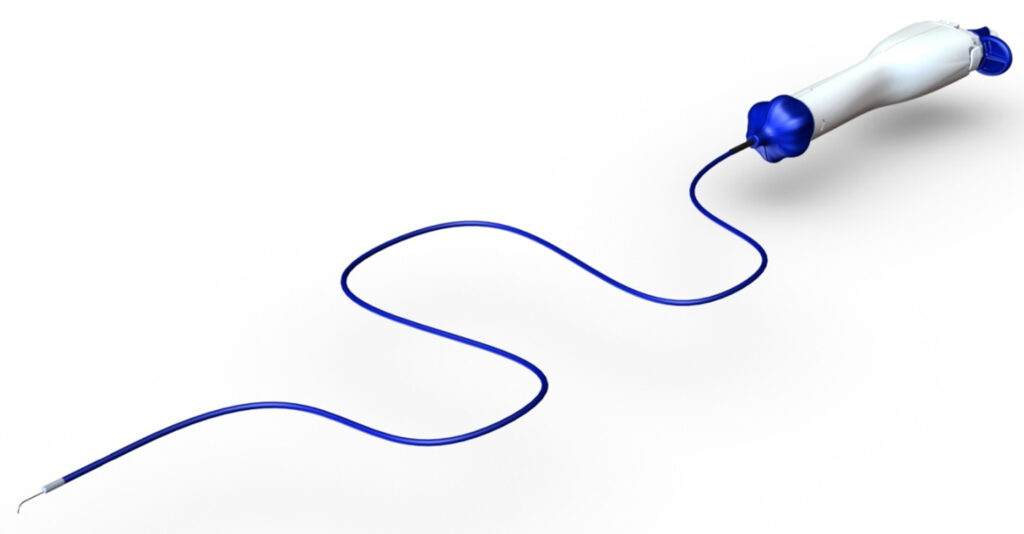
The trans-endocardial catheter designed to optimize delivery efficiency, safety, and reproducibility in transendocardial injection procedures.

Compared with other catheters used in regenerative cardiology, the trans-endocardial catheter offers several distinct advantages.

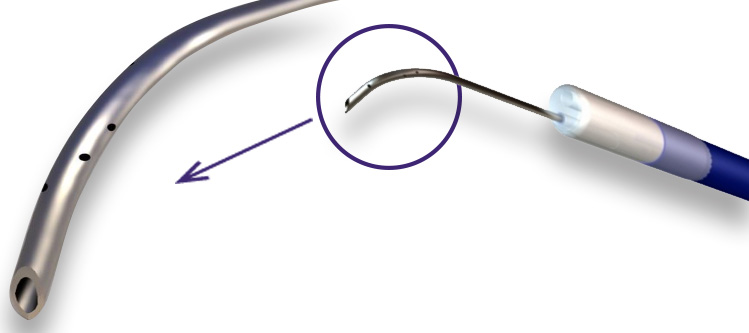
Optimized Needle Design for Controlled Penetration

The catheter features:

  • a retractable, beveled, fine‑gauge needle
  • pre‑set penetration depth
  • controlled tactile feedback

This minimizes risks of over‑penetration and perforation—critical for post‑AMI myocardium, which may be thinned or friable.

High Precision Injection Control

The C‑Cath allows for precise delivery of small volumes at multiple injection sites, ensuring:

  • homogeneous distribution
  • minimized leakage
  • optimal exposure of ischemic tissue to therapeutic cells
Stability and Navigation

The catheter’s shaft and tip are engineered to provide:

  • excellent stability during contact
  • consistent perpendicular orientation for injections
  • improved control in complex cardiac anatomies

This results in more reproducible injection depth and placement compared to generic endocardial catheters.

Compatibility With Mapping Systems

The C‑Cath is designed to integrate with electro‑anatomical mapping systems, allowing:

  • real‑time localization of viable but ischemic myocardium
  • delivery into pre‑identified target zones
  • efficient avoidance of scarred or akinetic regions

Compatibility enhances accuracy and may improve therapeutic outcomes.

Reduced Cell Damage and Improved Viability

The catheter’s low‑shear, cell‑friendly lumen design reduces mechanical stress on fragile cell populations such as CD34+ cells, supporting:

  • higher post‑delivery viability
  • improved retention
  • better functional performance

This is a major technical distinction, as many standard catheters are optimized for drug injection rather than living cell delivery.

Enhanced Operator Ergonomics and Procedure Efficiency

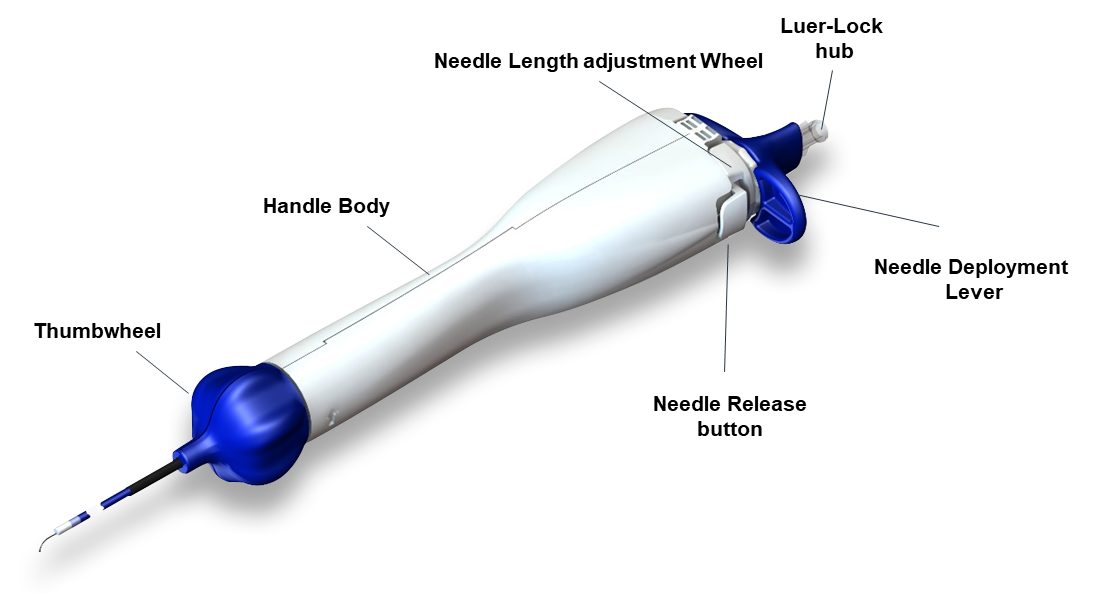
The system facilitates multiple injections in a single procedure with:

  • ergonomic plunger and control mechanisms
  • simplified rotation and repositioning
  • intuitive depth control

These practical elements reduce operator fatigue and procedure time—important in routine clinical integration.

C-Cathez
Safety Considerations

Transendocardial injection is generally safe when performed with dedicated catheters. The C‑Cath has been associated with:

  • low incidence of perforation
  • rare occurrence of pericardial effusion
  • stable hemodynamic profiles during injection

This is in part due to its optimized needle design and catheter stability.

Implications for Future Regenerative Therapies

As cell therapies advance toward commercialization—exemplified by autologous CD34+ cell products such as ProtheraCytes—the delivery route will be a critical differentiator for clinical efficacy and operational feasibility. Transendocardial administration:

  • aligns with interventional cardiology workflows
  • fits into post‑acute care pathways
  • can be standardized for multicenter trials
  • supports high‑value cell therapy products that depend on local therapeutic activity

Advances in catheter engineering, imaging, and mapping will continue to augment the precision and therapeutic impact of transendocardial injections.